

Two weeks ago, Iranian drones hit three Amazon Web Services data centres in the United Arab Emirates and Bahrain. Two facilities were struck directly. A third was damaged by a nearby explosion. Fires broke out. Power failed. Water from suppression systems flooded server rooms.
Banking apps went dark across the Gulf.
Payment platforms froze.
Ride-hailing services stopped.
Enterprise software that governments and corporations depend on every day simply ceased to function.
This was not a cyberattack. This was not a software glitch. This was the first known military strike on commercial cloud infrastructure in history.
It should change the way every government and every business on the planet thinks about where they store their data.
What Happened
On the morning of March 1, as part of Iran’s retaliation for the US-Israeli strikes that killed Supreme Leader Ayatollah Ali Khamenei, the Islamic Revolutionary Guard Corps launched attacks across the Gulf region. Among their targets: three AWS data centres.
In the UAE, two of three availability zones in the ME-CENTRAL-1 region were directly hit by Shahed-type drones. In Bahrain, a nearby strike damaged a third facility.
AWS confirmed the strikes on its health dashboard: structural damage, power disruptions, fires, and water damage. The company warned that recovery would be “prolonged” and the operating environment “unpredictable.” They told customers to migrate workloads to other regions immediately.
Two weeks later, impaired zones are still not fully restored. Full physical repair could take months.
The downstream damage was severe. Careem, Alaan, Hubpay, Emirates NBD, Abu Dhabi Commercial Bank, and Snowflake all reported outages or degraded service. Perhaps most alarming: Bahrain had migrated roughly 85% of its government data to a single AWS region. When that region went down, the consequences were immediate.
This Was a Preview, Not an Anomaly
The comfortable assumption in the tech industry has always been that data centres are civilian infrastructure. Off-limits in armed conflict.
That assumption is dead.
Iran’s state media named Amazon specifically, stating the facilities supported “the enemy’s military and intelligence activities.” They listed Microsoft, Google, and Oracle as potential future targets.
Researchers at the Carnegie Endowment for International Peace, one of the world’s most respected foreign policy think tanks, have warned that physical attacks on data centres will become more common as AI and cloud computing grow more strategically important. Fortune magazine described the incident as signalling “a new kind of war.”
Here is the reality every CIO and every government technology leader needs to confront: the cloud is not an abstraction. It is a physical building, in a physical location, subject to the physical risks of that location. Where your data lives has always mattered. Now it matters in ways that can shut down an entire region’s banking system overnight.
The question is no longer “what’s our cybersecurity posture?” It’s “what happens when a $20,000 drone takes out our data centre?”
Where Alberta Fits

As Alberta’s Minister of Technology and Innovation, I’ve spent years working to position this province as the compute capital of Canada. Our pitch has always been straightforward: abundant energy, cold climate, competitive taxes, and a government that removes barriers instead of building them.
The attack on AWS didn’t change that value proposition. It validated it.
Power. Alberta sits on massive natural gas reserves with generation capacity to match. Our government has passed legislation — the Utilities Statutes Amendment Act — that enables “Bring Your Own Power” for data centre operators. That means if you want to build a data centre in Alberta, you can bring your own electricity generation or sign agreements directly with power producers, and you get a fast-tracked approval process for doing so. This removes what is consistently cited as the single biggest barrier to new builds elsewhere.

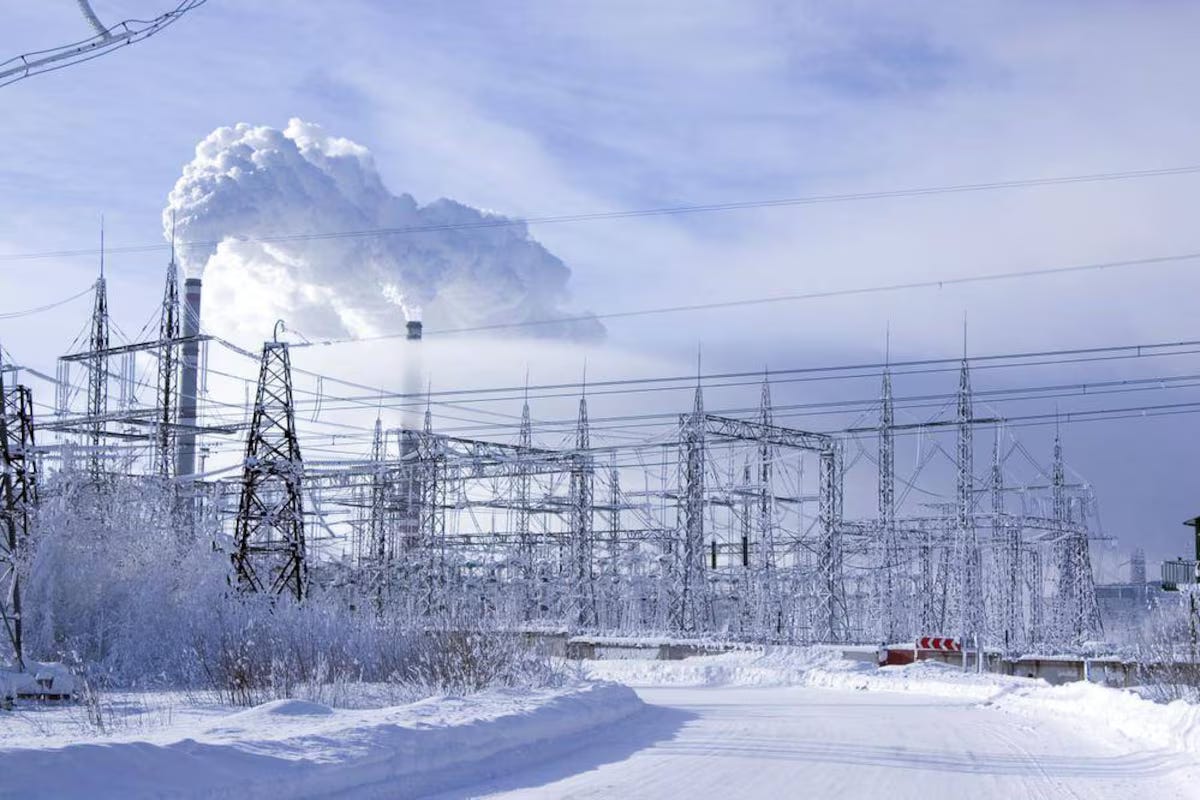
Climate. Cooling is the second-largest operating cost for any data centre. In the Gulf, you fight thermodynamics year-round. In Alberta, our cold climate enables what the industry calls “free cooling”. That means drawing in naturally cold outside air to cool server rooms instead of relying on expensive, energy-intensive mechanical refrigeration systems. It works because Alberta’s outdoor air is colder than the temperatures inside a data centre for most of the year, so you can cool the facility with outside air rather than giant industrial air conditioners.
The industry measures data centre energy efficiency using a metric called PUE, or Power Usage Effectiveness. A perfect score is 1.0, meaning all energy goes to computing. The global industry average sits around 1.55, meaning a huge portion of energy is wasted on cooling and overhead. Meta built one of its flagship data centres near the Arctic Circle in Sweden, using free cooling to achieve a PUE of 1.07. Alberta offers a similar climate advantage. Cold is a feature, not a bug.
Stability. Canada is a NATO ally with strong rule-of-law institutions. There is no comparable kinetic threat to domestic infrastructure. For organizations reassessing where to host critical workloads, that fact alone changes the calculus.
Speed. We have made a deliberate choice to reduce the regulatory timelines that slow infrastructure projects. When a hyperscaler or a sovereign client wants to build, we are working to be the fastest jurisdiction in North America to get them from approval to operation.
Sovereign Compute: Alberta’s Next Frontier
Everything I’ve described so far is about attracting investment and building infrastructure. But infrastructure is a means to an end. The real prize is what that infrastructure makes possible: true digital sovereignty for Canadians.
Right now, the vast majority of Canadian data, including sensitive government data, sits on cloud infrastructure controlled by American companies. Under the US CLOUD Act, the US government can compel those companies to hand over data they control, regardless of where in the world that data is stored. The Government of Canada’s own white paper on data sovereignty states it plainly: as long as a cloud provider operating in Canada is subject to the laws of a foreign country, Canada does not have full sovereignty over its data.
That should concern every Canadian. Our municipal governments, provincial agencies, federal departments, universities, hospitals, and businesses are storing critical data and running essential workloads on infrastructure that a foreign government can access without Canadian courts having a say. In an era where data sovereignty is rapidly becoming a national security issue, this is a vulnerability we cannot afford to ignore.
Alberta is working to fix that. We are building the compute capital of Canada, with infrastructure that gives Canadian researchers, innovators, and public institutions access to world-class computing power on Canadian soil, under Canadian law, and subject to Canadian oversight alone. The Canada-Alberta Memorandum of Understanding already commits both levels of government to supporting sovereign compute infrastructure in this province.
This is about making sure the next generation of Canadian AI research, health innovation, and public sector modernization is powered from Alberta, not rented from a foreign jurisdiction.
And once we’ve built sovereign compute for Canadians, we can export that same capability to allied nations. The concept we are developing is what I call “digital embassies.” Allied governments and global enterprises should have access to secure, trustworthy computing environments in a stable, neutral, rule-of-law jurisdiction. For countries and enterprises looking to host sensitive data, AI workloads, and cloud infrastructure outside geopolitically exposed regions and outside the reach of foreign access frameworks, Alberta can be that jurisdiction. We have the energy, the climate, the stability, and the legal framework to make it real.
If you are a government, an enterprise, or an investor exploring where to place your next generation of critical compute infrastructure, we want to have that conversation. Contact my office and ask for the Data Centre Concierge.
Technology is not just an industry; it’s the future of every industry. The countries and jurisdictions that control secure, reliable, affordable compute capacity will hold a strategic advantage for decades. Alberta is paving the way for the economy of the future.
The cloud came down to earth two weeks ago. Alberta is here to make sure it doesn’t stay down.
Great vision and great point. A strategic advantage for Alberta and Canada to take advantage of.
For many years, businesses around the world moved rapidly to adopt cloud computing, drawn by its clear advantages and efficiencies. However, while many recognized the financial benefits, fewer fully considered the risks associated with where their data and services would be physically located, and the legal jurisdictions governing them.
Recent global events, including developments involving Iran, have underscored the importance of data sovereignty and regulatory oversight. As a result, the physical location of data and the laws applicable to service providers are likely to become much more prominent factors in hosting decisions.
In this context, it is encouraging to see Alberta taking proactive steps to position itself as a preferred destination for data centre investment. This approach benefits both operators and the businesses that rely on these facilities to store and manage their data.
Most importantly, this represents another meaningful step toward addressing Alberta’s longstanding challenge of economic diversification, demonstrating a willingness to lead with forward-thinking, strategic initiatives.